

Stop Trying to Finish the Room
Unfortunately,
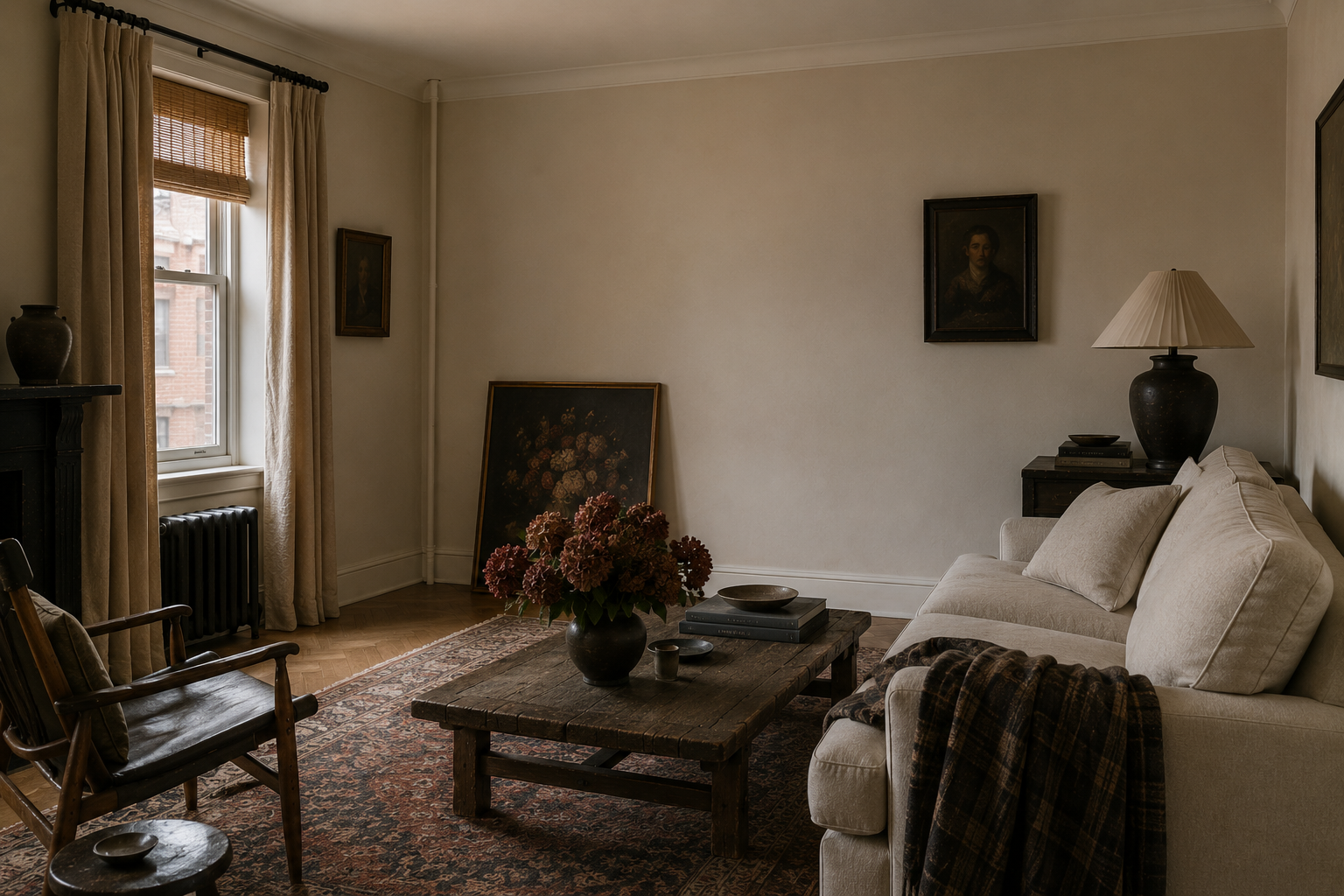
We have a slightly inconvenient piece of design advice: Your room does not need to be finished by Friday, or next month and possibly not even this year.
We know. That's considerably less satisfying than ordering twelve things tonight and watching the tracking numbers roll in.
But some of the best rooms we've ever walked into have one thing in common.
They took time.
The Internet Has Made Us Impatient
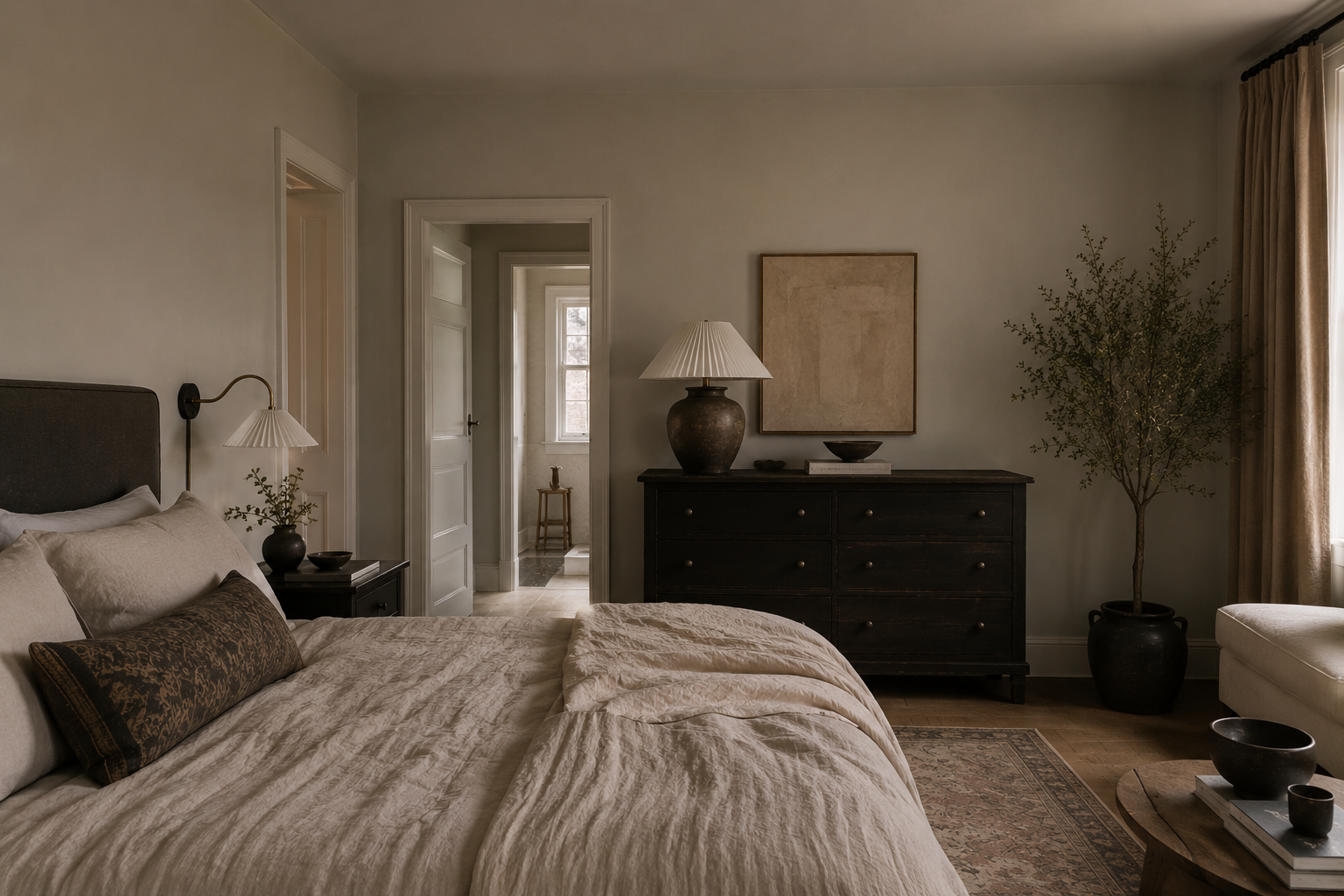
We see a finished room online and consume the entire thing in about four seconds.
Sofa. Rug. Lamp. Art. Chairs. Done.
What we don't see is that the antique table might have been found three years ago. The painting came from someone's grandmother. The chair was bought on vacation. The lamp was an estate sale find that sat in a closet for six months before anyone figured out where to put it.
We're seeing the final photograph, not the timeline.
And that's an important difference.
When you try to recreate that collected feeling in a single weekend, things can start looking a little too coordinated.
Because they are.
You Don’t Need to Fill the Empty Corner
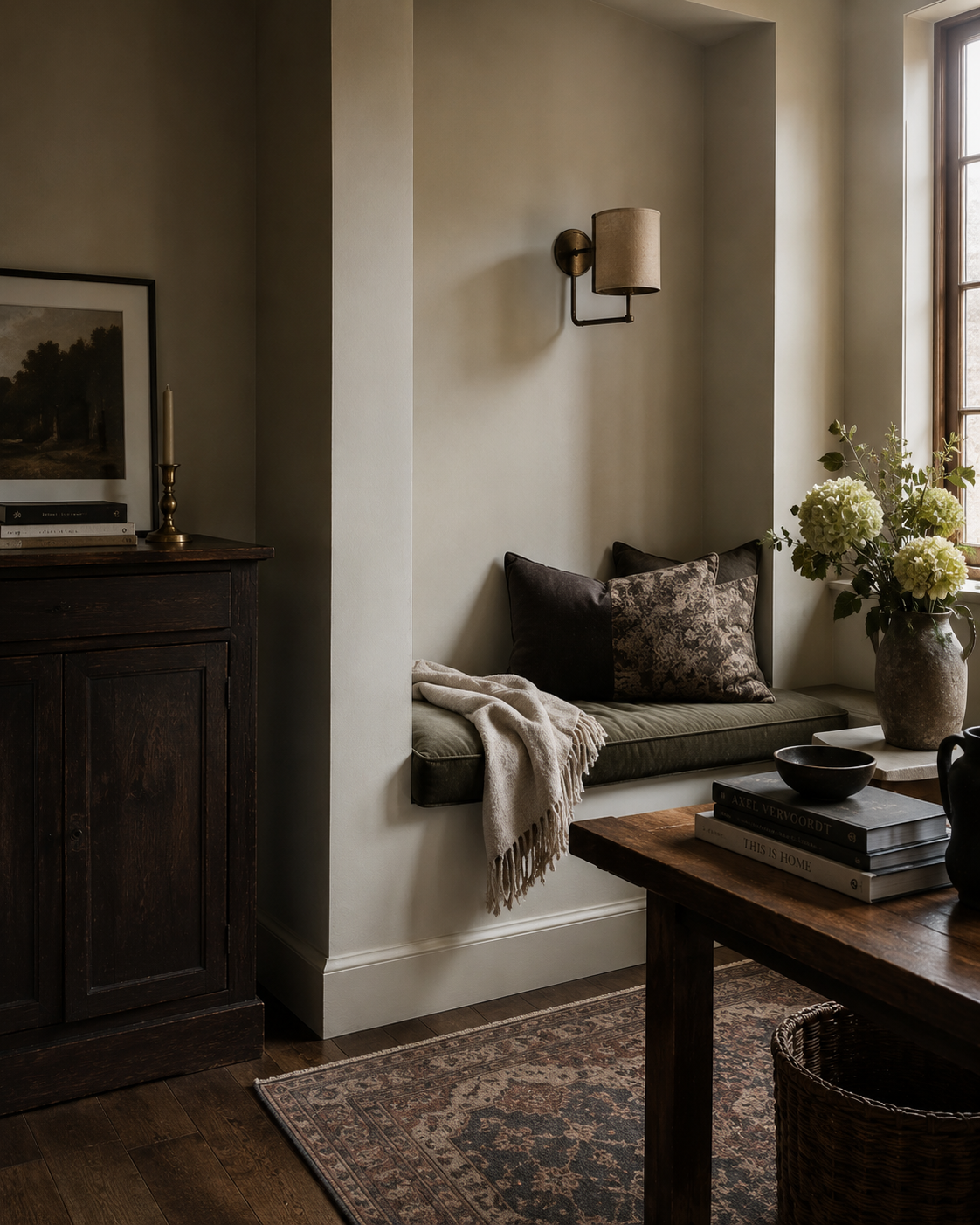
Empty space makes people nervous. There's a corner. Therefore, something must go in the corner. So we buy a chair. Does anyone sit there? Absolutely not. But the corner has been defeated.
Sometimes we'd rather leave that space empty until we find something worth putting there. An empty corner isn't necessarily an unfinished corner. It can just be an empty corner.
Your house will survive.
Buy the Thing You Can't Stop Thinking About
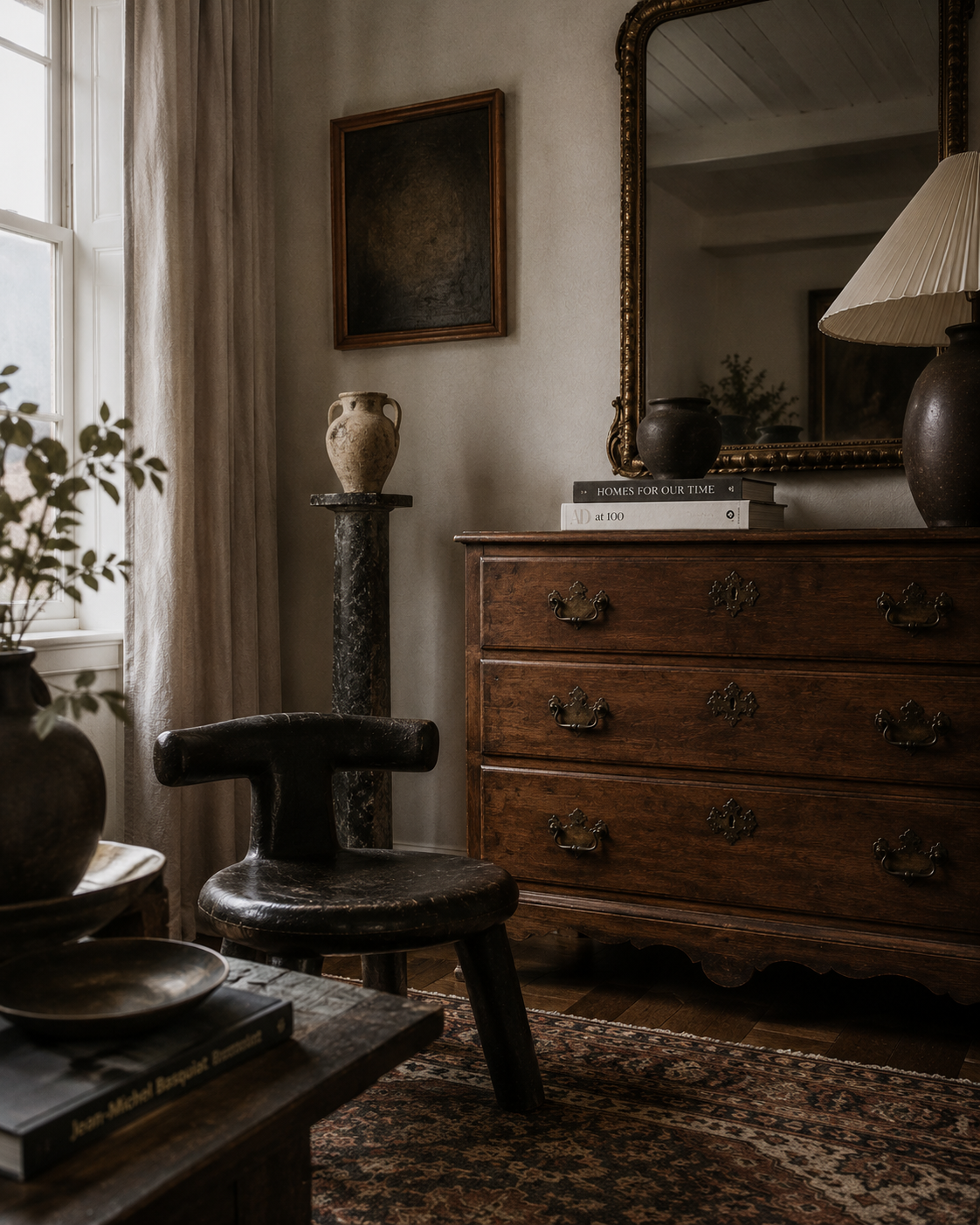
We'd rather build a room around something you genuinely love than fill it with things you simply don't dislike.
There's a difference. The piece you keep going back to at the antique store. The ridiculous lamp you took a picture of and then thought about for three days. The painting that doesn't match anything you own. The chair you have absolutely no logical place for. Those are usually more interesting starting points than searching for “beige accent chair 32 inches wide.”
Practicality matters.
But occasionally, obsession is a pretty good design tool.
Not Everything Needs a Partner
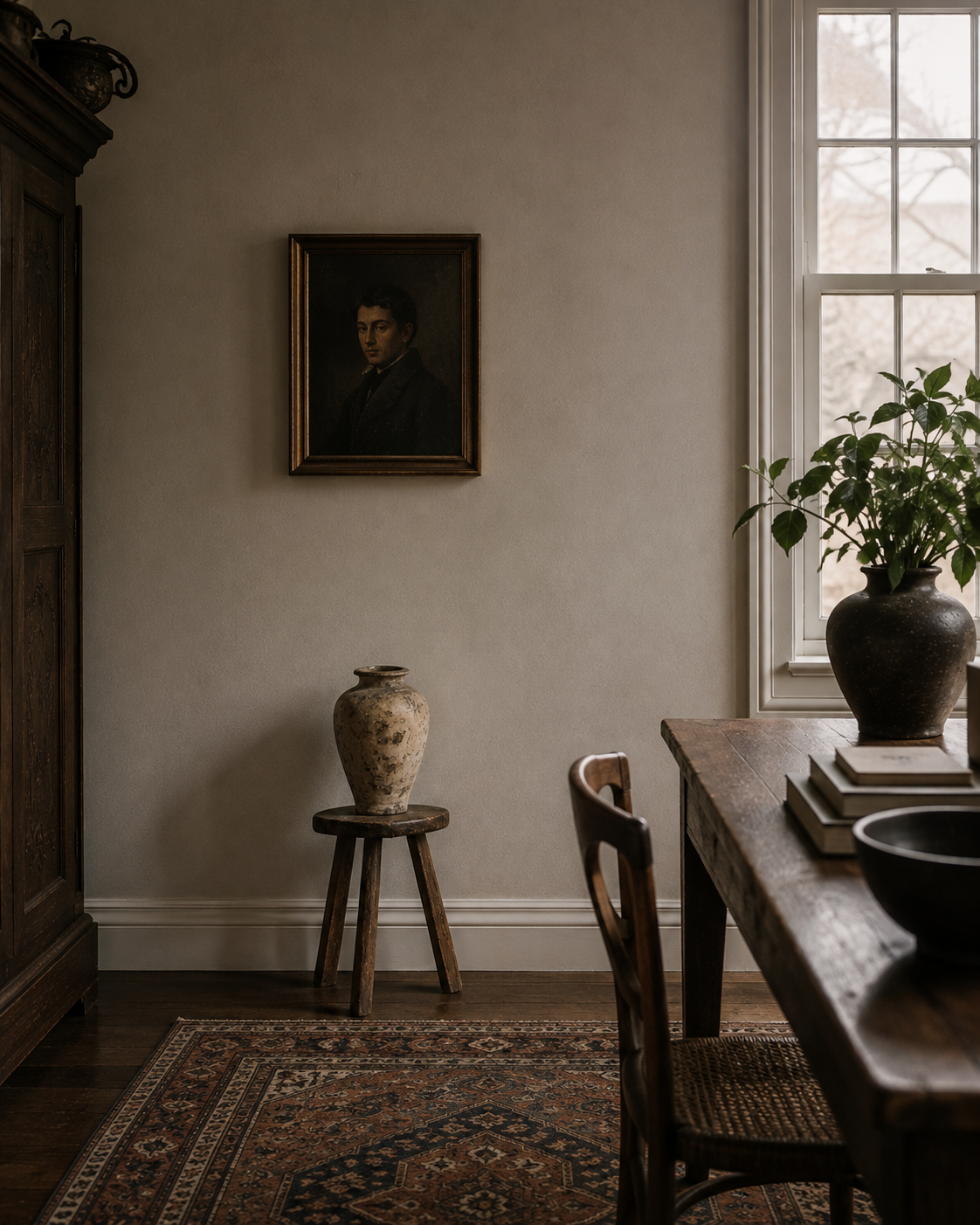
Somewhere along the way, decorating became very concerned with pairs.
Two matching lamps, Two matching chairs. Two matching nightstands. Two matching pillows sitting very politely on either side of the sofa.
Symmetry can be beautiful. It can also become predictable.
Maybe one side of the bed has a little antique chest and the other has a simple table. Maybe one lamp is taller. Maybe the chairs aren't the same.
If the room feels balanced, the pieces don't necessarily have to match.
Balance and matching are not the same thing.
Let the House Tell You What It Needs
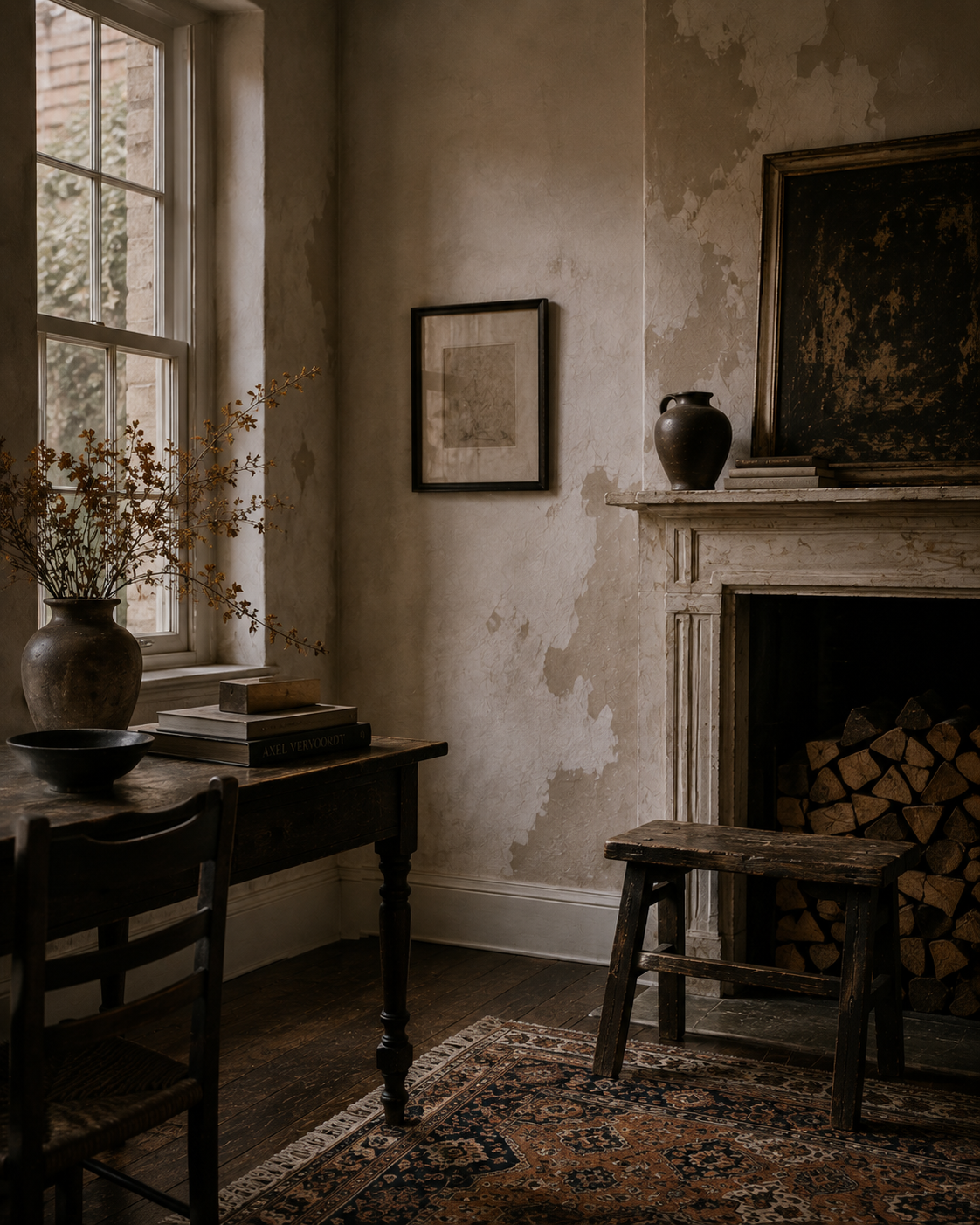
This is the part that takes patience.
Live in the room. Notice where you naturally put your drink. Notice which chair nobody uses. Notice that you always drag the floor lamp six inches closer when you read. Notice that the giant coffee table you thought would overwhelm the room is actually exactly what it needed.
A floor plan can tell us a lot. Living in a space tells us more. Good design responds to how a home actually behaves.
The Temporary Solution Can Stay Temporary
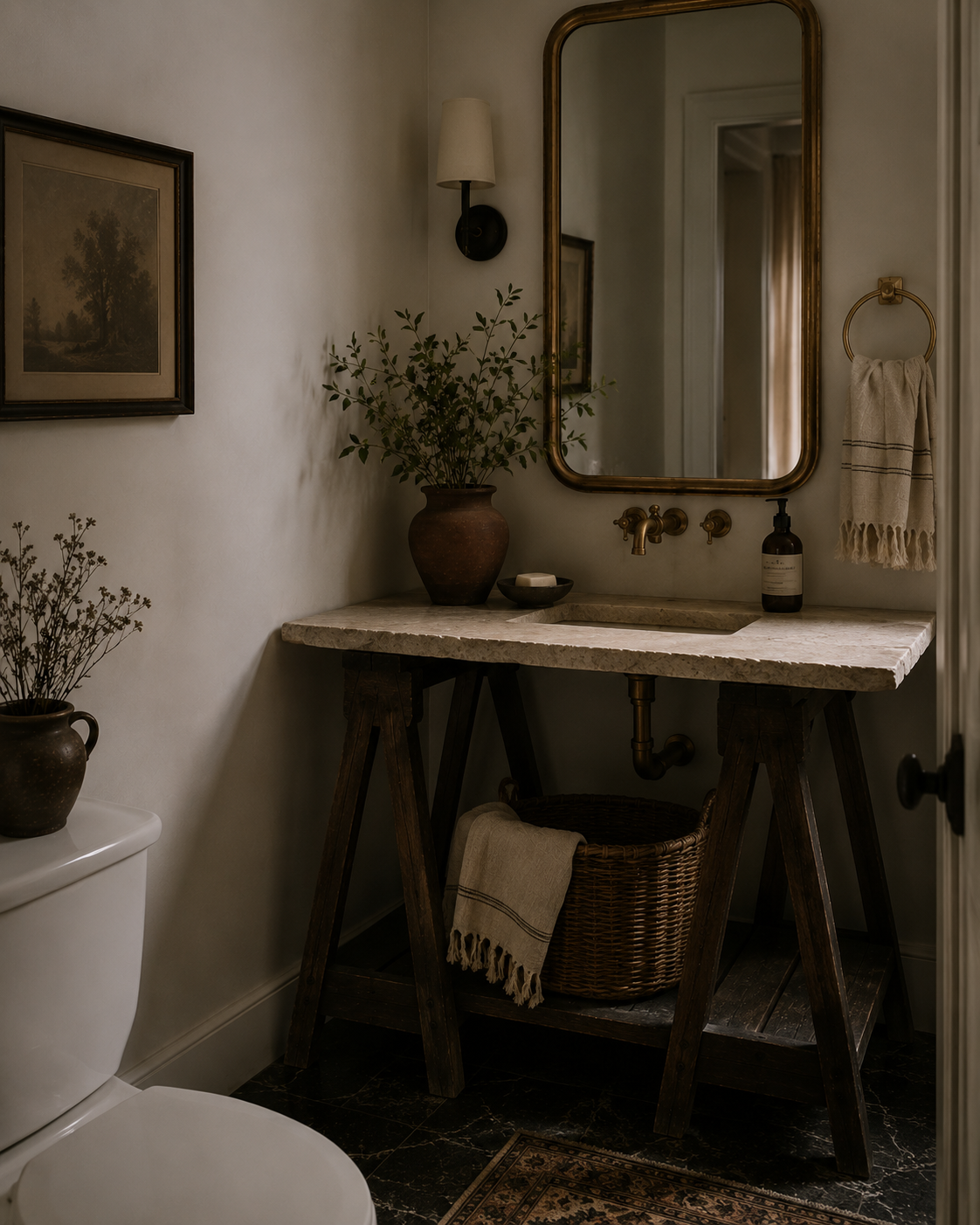
We're completely comfortable with a room having placeholders. Keep the old side table until you find the right one. Leave the wall blank.
Use the lamp you already own.
You don't need to replace something mediocre with something else mediocre just because you're impatient. That's how homes slowly fill themselves with things nobody particularly loves.
Wait.
The right piece will eventually show up and when it does, you'll be glad you didn't settle.
Your House Should Have a Timeline
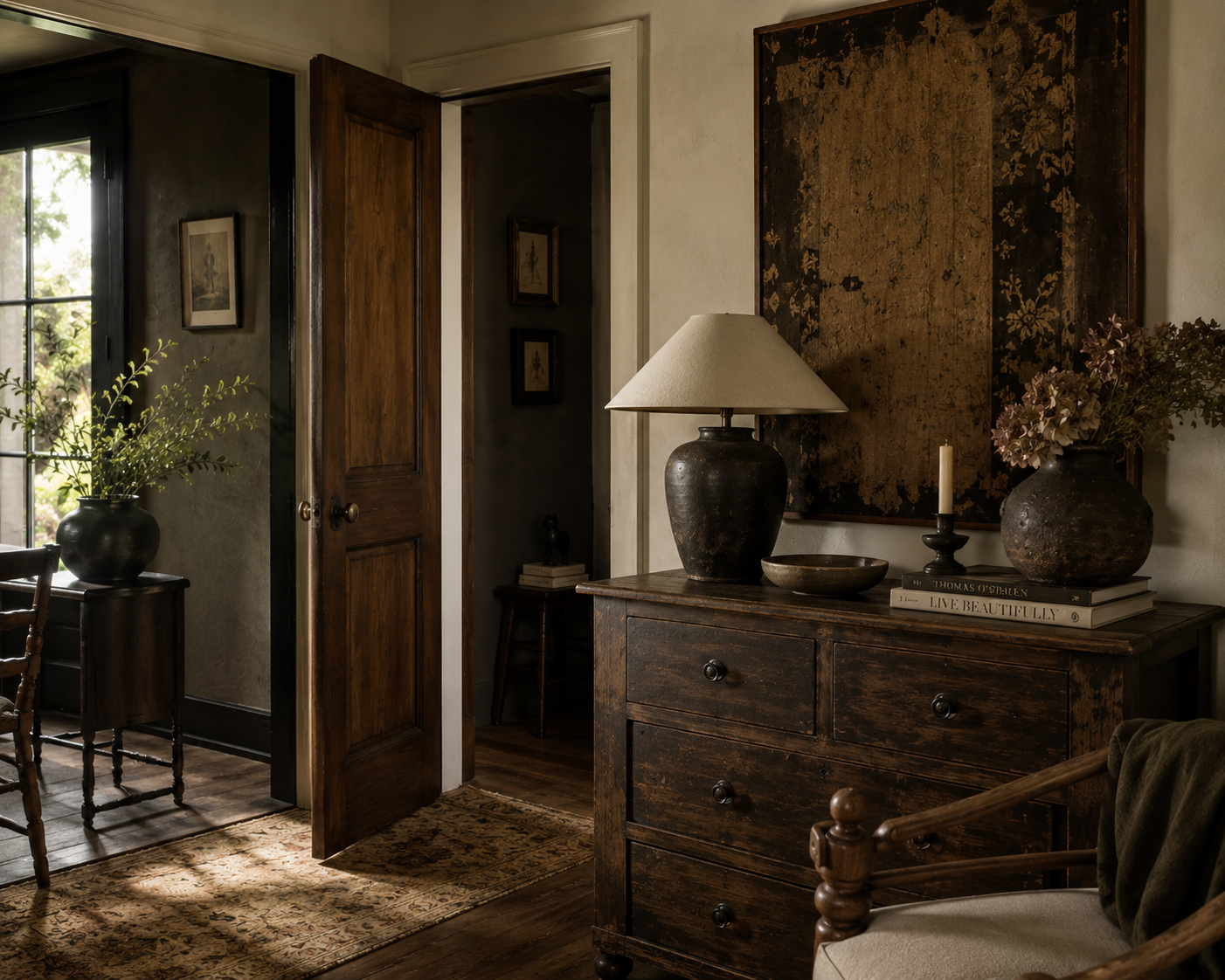
We like being able to look around a room and see different periods of someone's life.
The table you've owned forever. The art you bought five years later. The chair you found last summer. Something inherited. Something brand new. Something you're still not entirely sure about.
Those layers are difficult to manufacture because they're not really a design style.
They're history and history takes time.
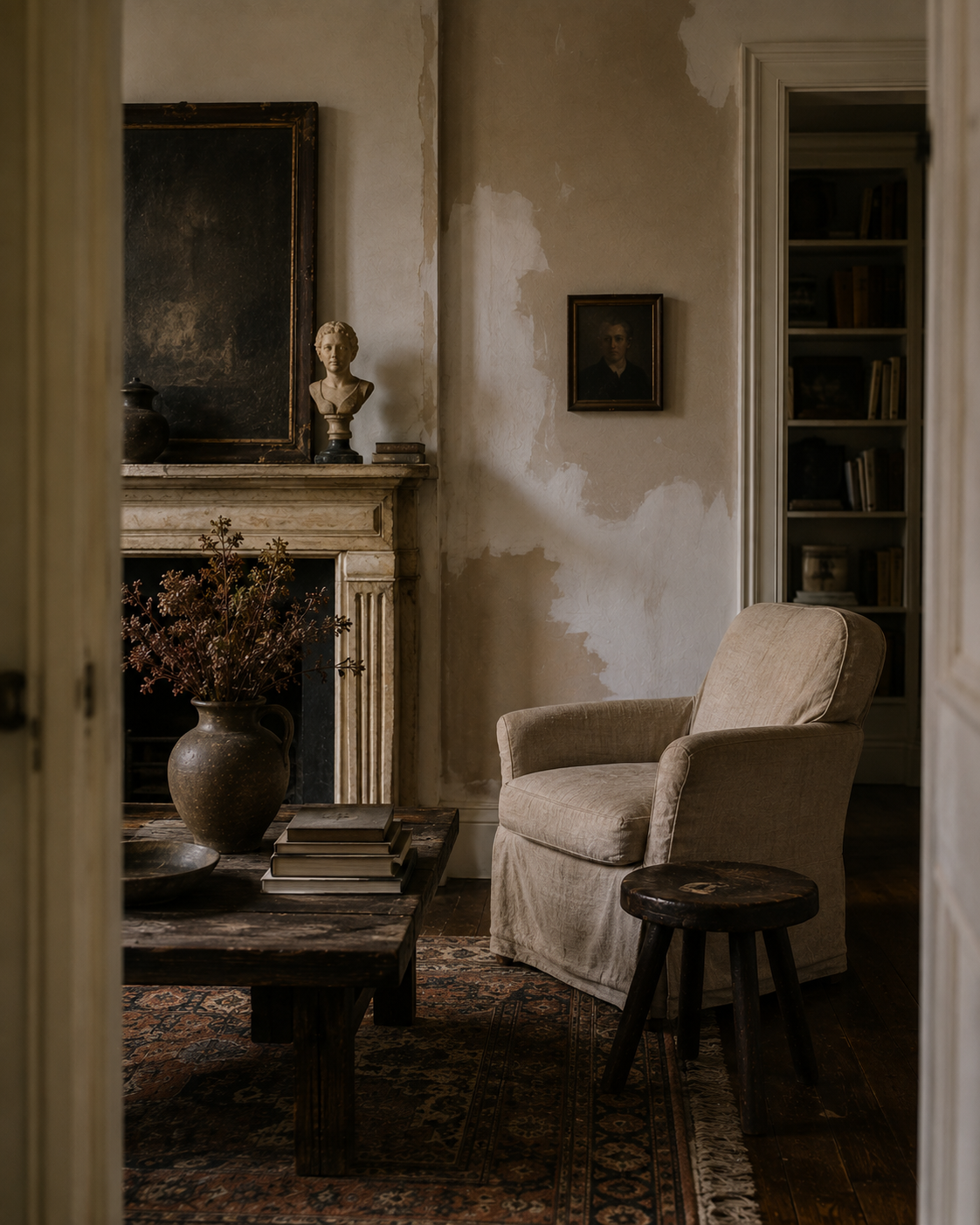
Maybe, It's Never Finished
Here's the other possibility. Maybe there isn't a finish line.
Homes change because the people living in them change. You find something better. You move the chair. You repaint the room. You inherit something. You finally replace the table you've complained about for seven years.
Then six months later, you move everything again.
Good!!
We'd much rather see a home that keeps evolving than one that was “completed” in 2026 and never touched again. So stop trying to finish the room.
Make it good.
Then give it enough time to become yours.