

Your Furniture Might Be Too Small
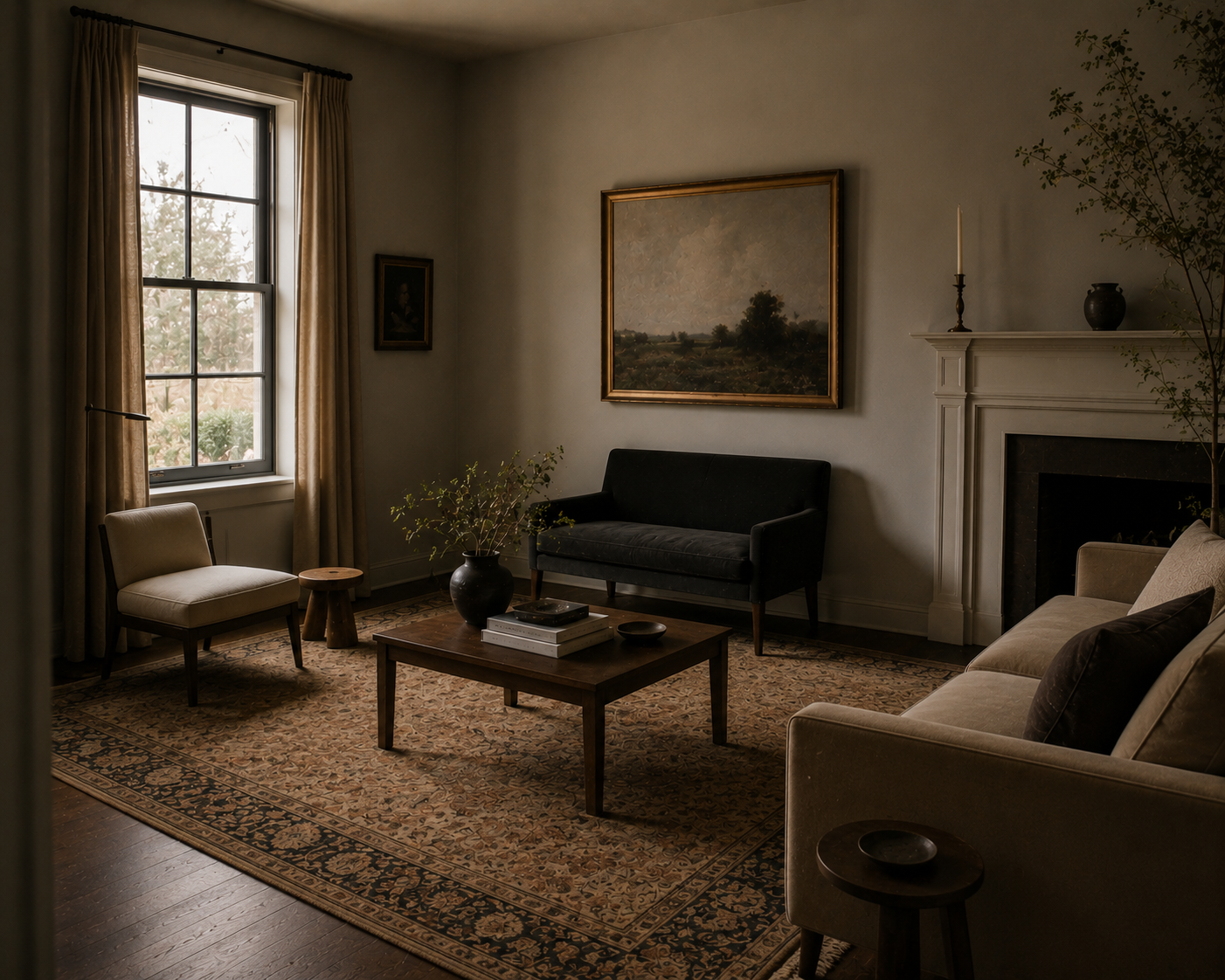
There’s a strange thing that happens when people are afraid of making a room feel crowded.
They start buying tiny furniture.
A small sofa. A small rug. A little coffee table floating somewhere in the middle. A collection of side tables that look as though they’re apologizing for taking up space.
The thinking makes sense.
Small room. Small furniture.
Except that’s not always how it works.
Sometimes all those little pieces actually make the room feel smaller.
Scale Changes Everything
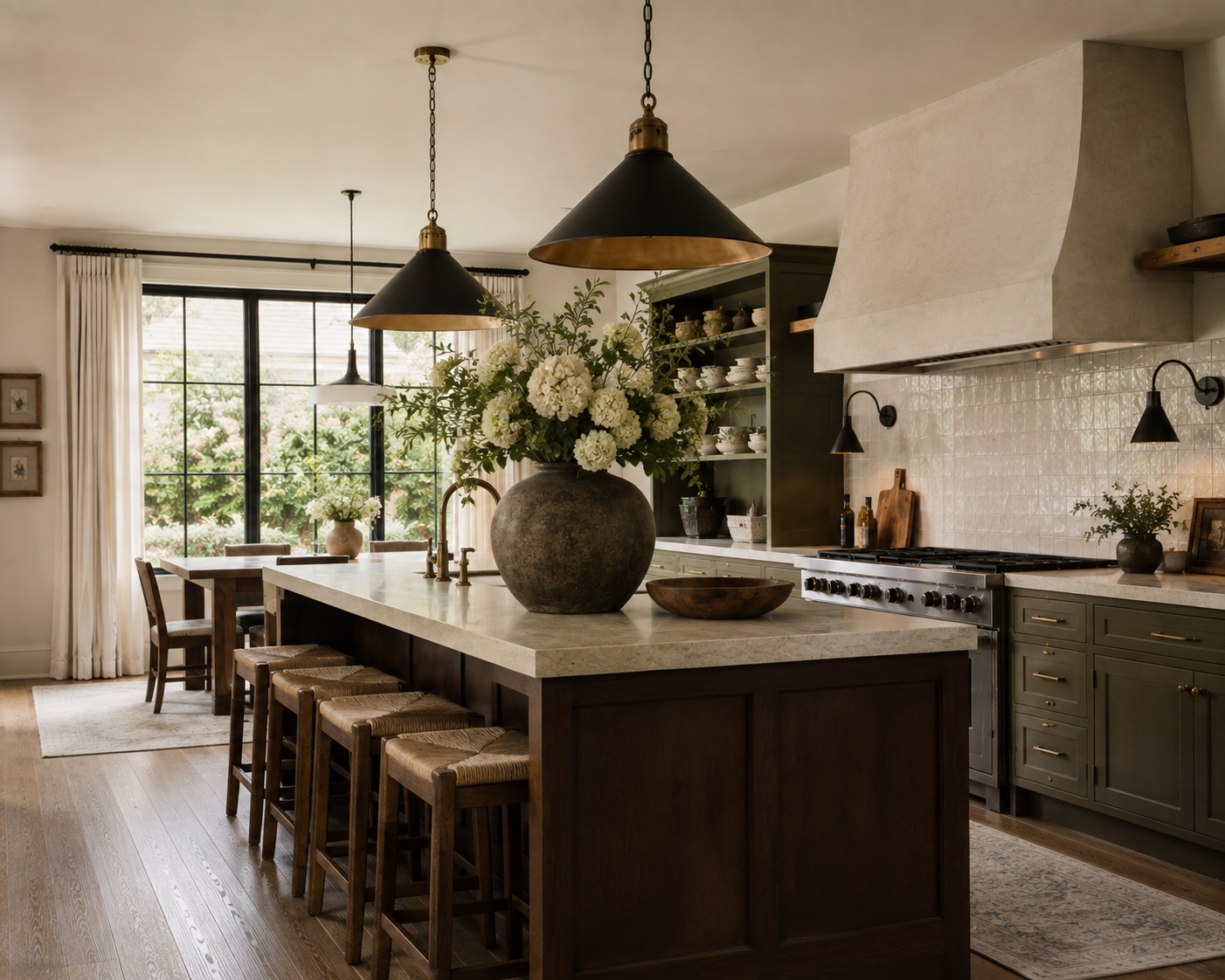
You can choose a beautiful sofa, beautiful chairs, a beautiful rug and beautiful lighting and still end up with a room that feels completely off.
Usually, we start looking at scale.
Scale is one of those things you notice even when you don't know you're noticing it.
A lamp that's too small makes the table underneath it feel awkward.
A rug that's too small makes the furniture look disconnected.
A tiny piece of art floating above a large sofa can make an entire wall feel unfinished.
Nothing is necessarily wrong with any of those individual pieces.
They're just wrong for the space.
And that's an important distinction.
Bigger Can Actually Feel Calmer
This is where design gets a little counterintuitive.
Sometimes putting something larger into a small room makes the room feel bigger.
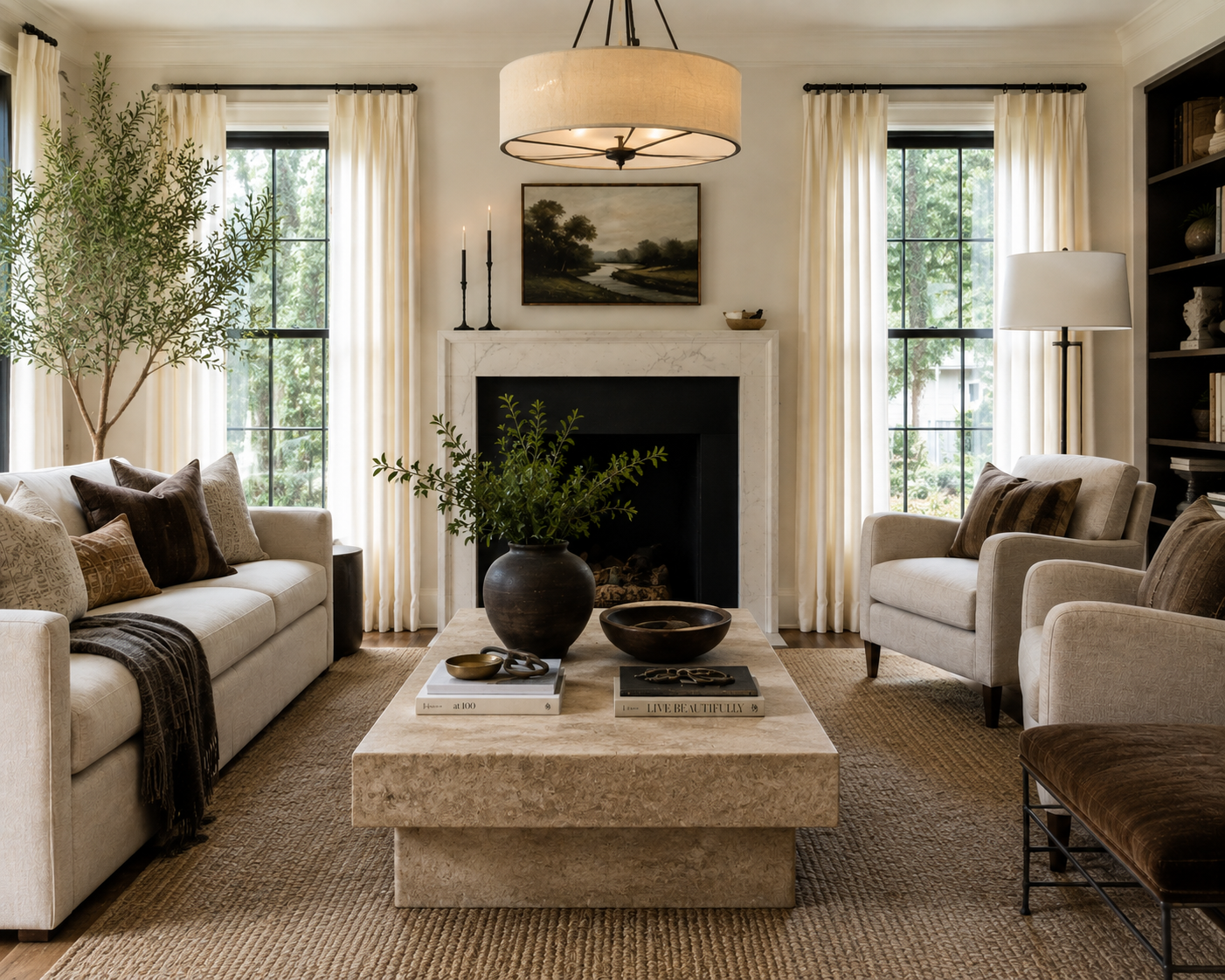
One substantial coffee table can feel calmer than three little tables scattered around.
A large piece of art can make a wall feel more expansive.
A generously sized rug can visually connect an entire seating arrangement instead of chopping the floor into little sections.
Even an oversized lamp can give a room the kind of confidence it was missing.
The goal isn't to cram enormous furniture into every available inch.
It's to stop being afraid of letting a few things have presence.
Please, Give the Rug a Fighting Chance
We need to talk about rugs.
Specifically, the tiny rug sitting in the middle of the living room with absolutely no furniture touching it.
It's trying its best.
But it cannot do this alone.
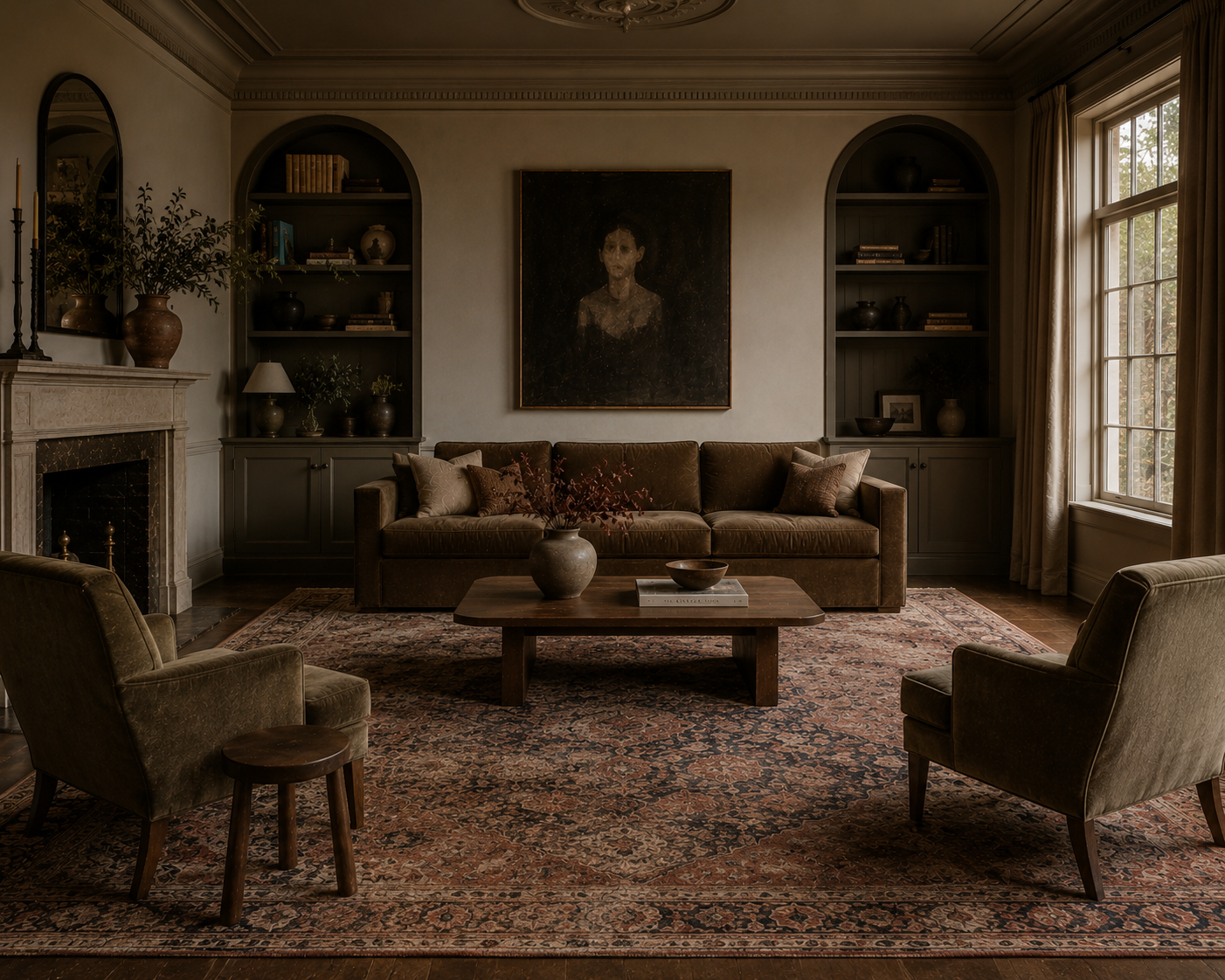
A rug should help establish the boundaries of a space. In a living room, we generally want the furniture to have some relationship with it, rather than orbit around it from several feet away.
When you replace an undersized rug with one that actually reaches beneath the furniture, something interesting happens.
The room often feels larger.
Nothing about the architecture changed.
The furniture didn't move into another dimension.
The proportions simply started making sense.
Stop Automatically Pushing Everything Against the Wall
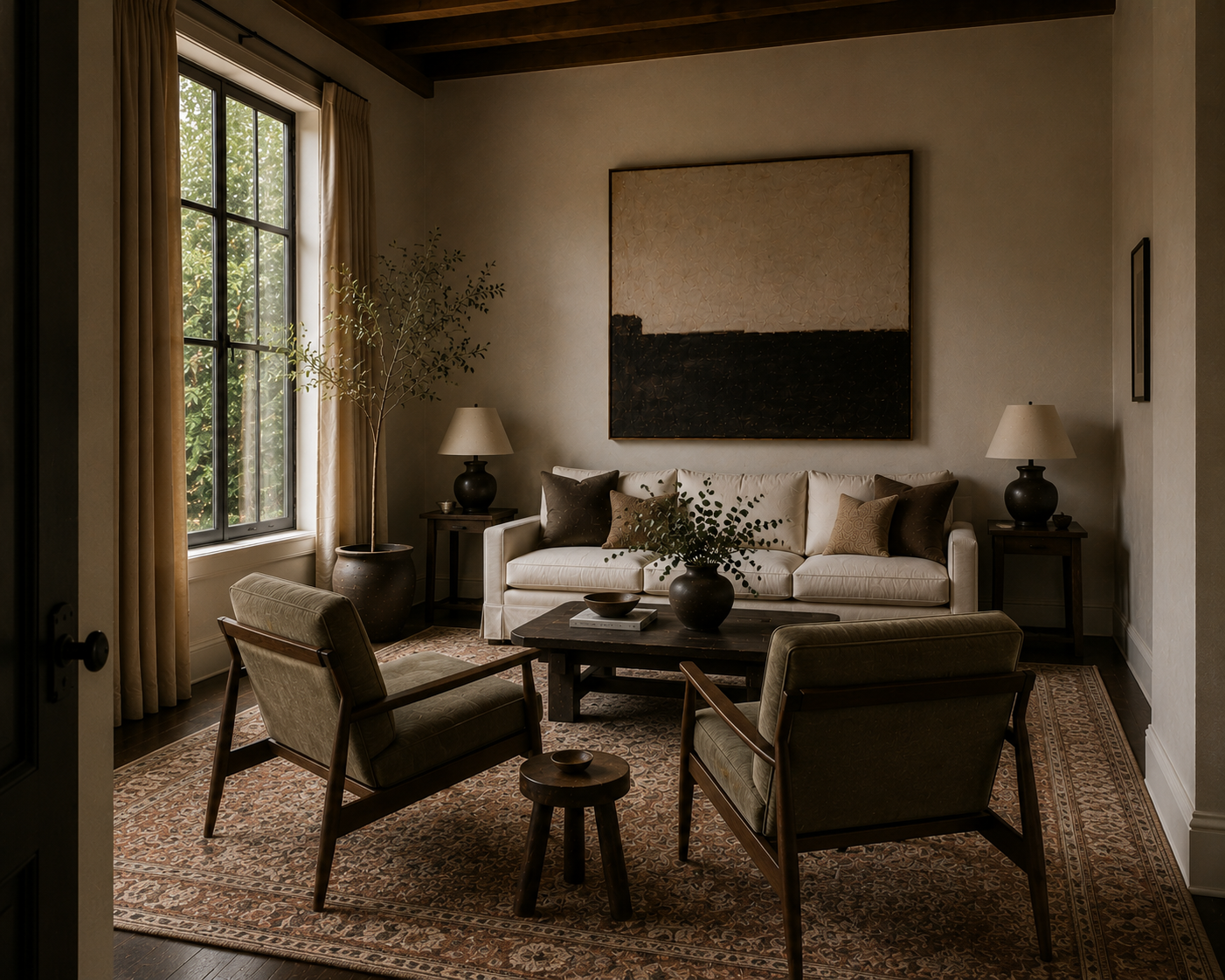
Another small-room instinct is to push every piece of furniture as far toward the walls as physically possible.
Sometimes that's necessary.
Sometimes it leaves you with a mysterious empty patch of floor in the middle of the room and a sofa sitting twelve feet away from the person you're trying to talk to.
Furniture doesn't have to hug the perimeter.
Pulling a chair forward or floating a sofa can create a much more intentional arrangement, even if you're only moving things a few inches.
A room should be designed around how people use it, not around preserving the largest possible rectangle of empty flooring.
Tiny Art Is Not Fooling Anyone
We love small art.
We really do.
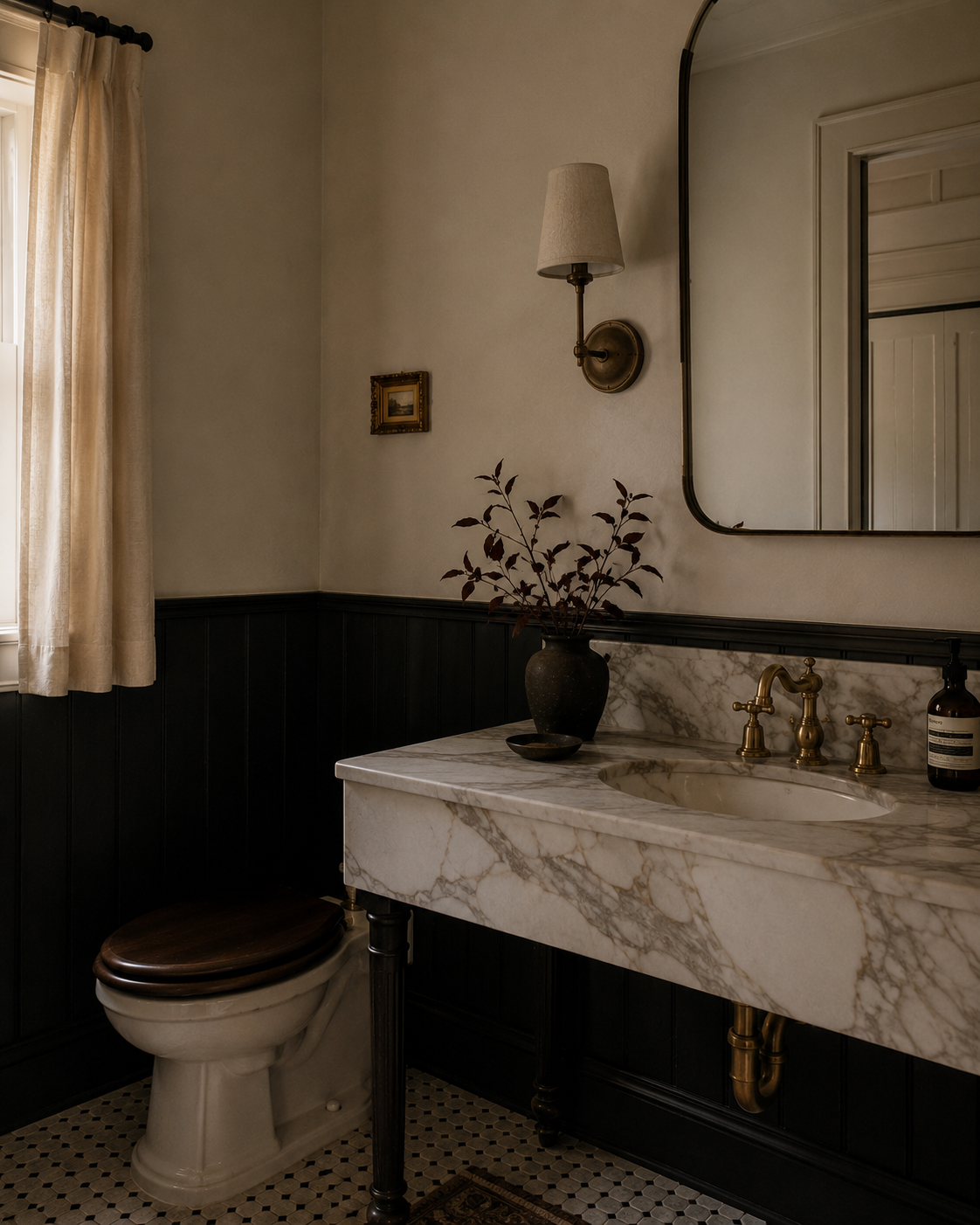
A tiny painting tucked beside a doorway or incorporated into a gallery wall can be fantastic.
But one little 11-by-14 frame centered above an eight-foot sofa is probably not creating the effect you hoped for.
Large walls need enough visual weight to hold them.
That doesn't necessarily mean buying one enormous painting. You could create a grouping, hang a textile, use an architectural object or combine pieces of different sizes.
But the composition needs to acknowledge the amount of wall around it.
Sometimes the solution to an empty-looking room isn't adding more things.
It's making the things already there bigger.
Every Piece Doesn't Need to Be the Star
There is another side to scale.
If everything is oversized, sculptural and demanding attention, you've created a different problem.
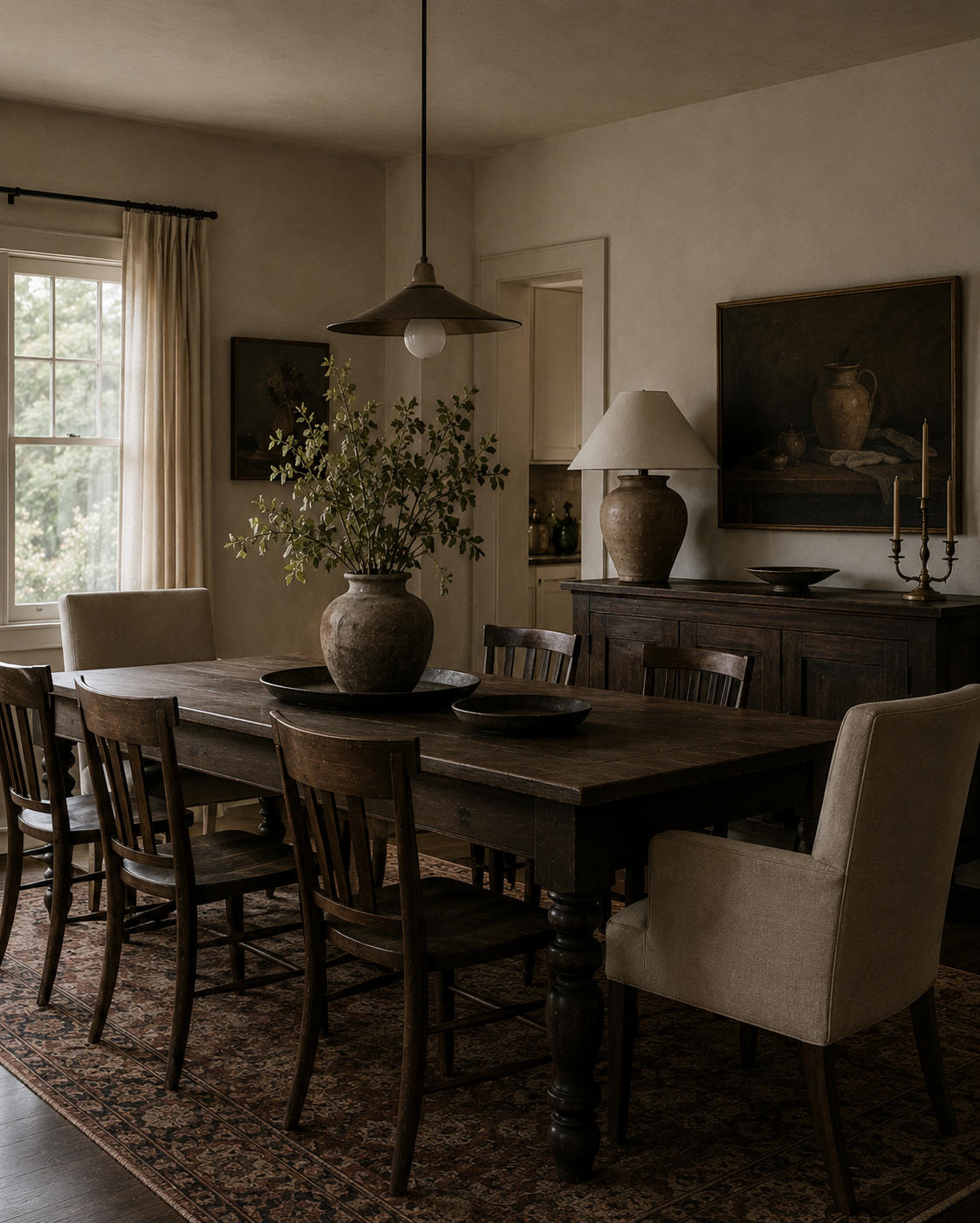
Rooms need hierarchy.
There should be moments your eye notices first and quieter pieces that support them.
Maybe the oversized pendant is the moment in the dining room.
Maybe it's the enormous antique cabinet.
Maybe it's the art.
Maybe it's a ridiculous lamp that you absolutely did not need but now cannot imagine living without.
Let something lead.
Everything else doesn't need to compete for the job.
Measure First. Then Question the Measurement.
Yes, we measure.
Constantly.
But design isn't simply an equation where the correct dimensions automatically produce a beautiful room.
Sometimes the technically appropriate piece still looks timid once it's in the space.
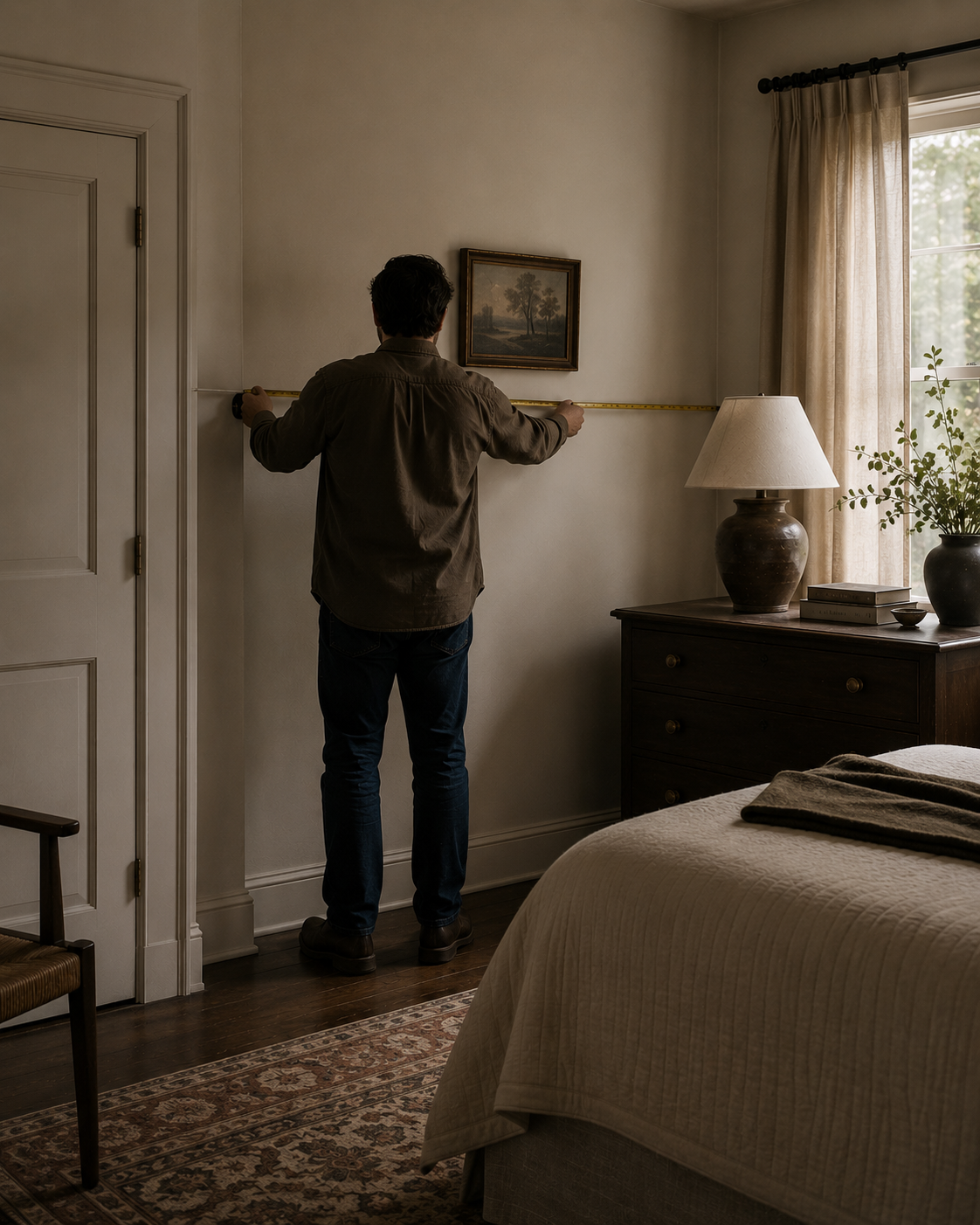
That's why we like to tape dimensions onto the floor. Hold cardboard against a wall. Stack books underneath a lamp to see whether it needs more height.
Give yourself some way to experience the scale before committing to it.
And if you're deciding between the slightly-too-small version and the slightly-too-large version?
We probably already know which one we're rooting for.
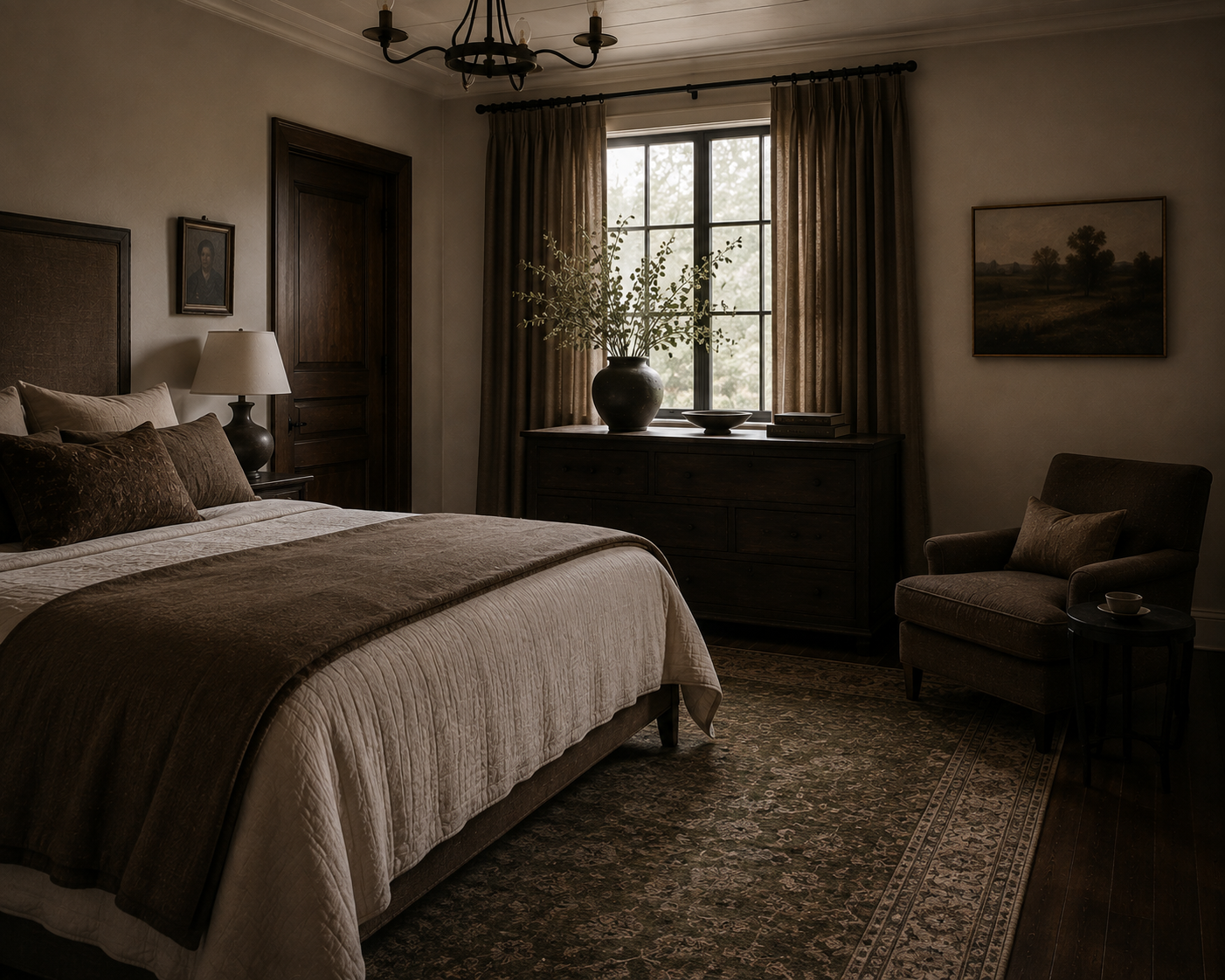
Let Something Take Up Space
Your home doesn't need to feel stuffed.
It also doesn't need to look afraid of its own furniture.
A room feels comfortable when the things inside it have enough scale to belong there.
So buy the larger lamp.
Try the bigger rug.
Hang the enormous painting.
And maybe stop buying tiny coffee tables because you're worried the room can't handle anything bigger.
It probably can.